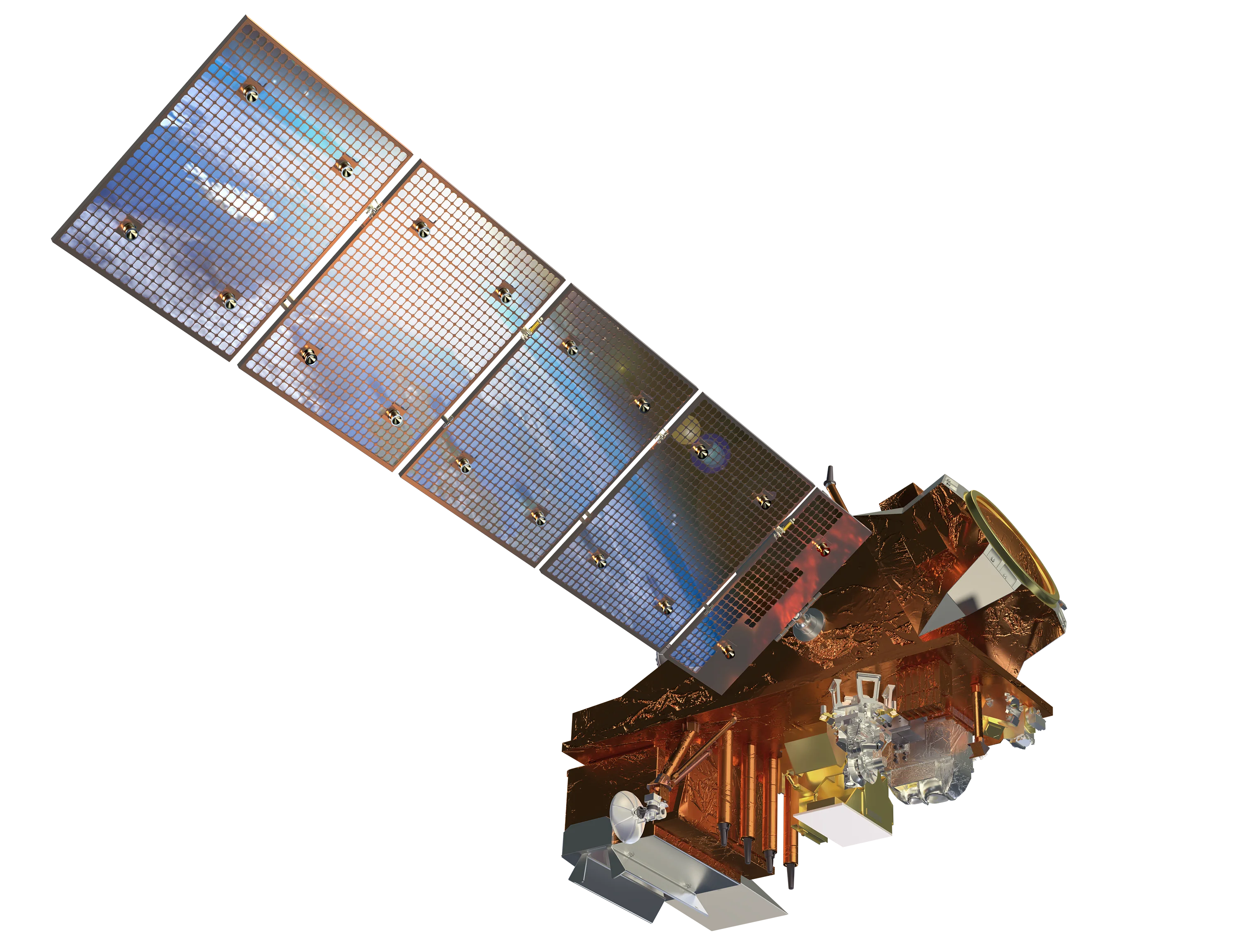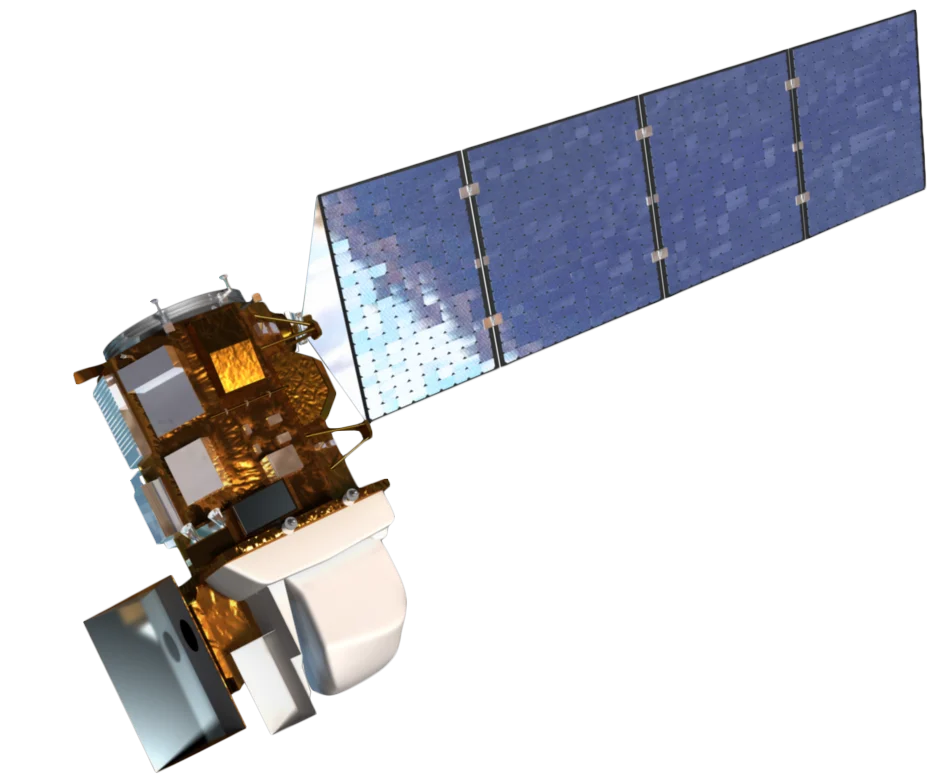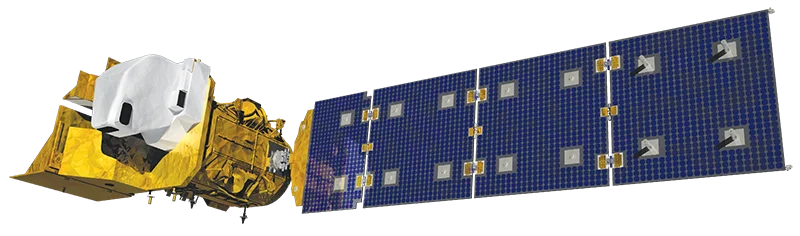
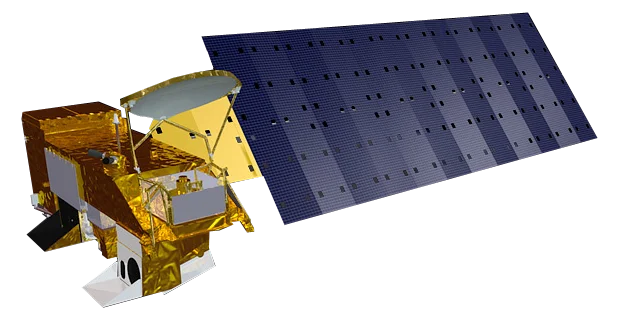
Overview
Aqua (originally EOS PM-1) is NASA's Earth Observing System satellite for the water cycle. Launched in May 2002, it crosses the equator in the early afternoon, complementing Terra's morning pass so that MODIS sees most of the Earth twice a day. Like Terra, it has operated for many years beyond its six-year design life.
Instruments
- MODIS - Moderate Resolution Imaging Spectroradiometer with 36 bands at 250 m to 1 km
- AIRS - Atmospheric Infrared Sounder with 2378 channels for temperature and humidity profiles
- AMSU-A - Advanced Microwave Sounding Unit supporting AIRS in cloudy conditions
- CERES - Two Clouds and the Earth's Radiant Energy System instruments
- AMSR-E - Japan's microwave radiometer, which operated until 2015
Extended Mission
Aqua is in the final years of its extended mission. It has stopped the manoeuvres that held its original schedule, so its orbit has been lowered and its equator crossing time is drifting later in the afternoon. VIIRS on the JPSS satellites continues the afternoon MODIS-class record.
Data Access
All Aqua data is free and open through NASA's Earthdata archives.
Applications
- Wildfire detection - Afternoon MODIS active fire observations
- Ocean colour and temperature - Chlorophyll and sea surface temperature
- Weather forecasting - AIRS temperature and humidity profiles
- Snow and sea ice - Daily snow cover and sea ice extent
- Drought monitoring - Vegetation and land surface temperature
Image: NASA/JPL AIRS Project, CC BY 2.0.