Solutions / Industries / Finance & Insurance
Satellite monitoring for finance and insurance.
The problem
Finance and insurance run on data that is late, incomplete or self-reported. Adjusters arrive days after landfall. Lenders trust borrower updates. Green bond trustees accept annual reports as evidence. By the time the real picture lands, exposure has shifted or funds have been misapplied.
Terrabit delivers satellite imagery so lenders, insurers and sustainable-finance teams can verify what is actually on the ground - a greenhouse going up, a solar farm running, a reforestation project taking hold - without a site visit, at the cadence each line needs.
Where finance and insurance miss the signal
Basis risk in parametric
Trigger data is too coarse to reflect actual losses on the ground, so underwriters carry basis risk and payouts miss the loss.
Slow claims triage
Adjusters take days to reach flood, cyclone or bushfire zones. Loss creep compounds and reserves are set against weak evidence.
Unverified loan use
Lenders take borrowers at their word, with no independent check that the funded asset is actually being built.
Lagging commodity signals
Trading desks wait days for official inventory reports when satellite data could tell the same story in hours.
Who it's for
Built for every desk that prices and monitors physical risk.
Reinsurers, underwriters, lenders, commodity desks and sustainable-finance teams - one platform, put to work differently by each desk.
Reinsurers & catastrophe modellers
Exposure enrichment, historical event footprint libraries and validation of exceedance-probability curves.
Property & casualty underwriters
Portfolio-level imagery for property inspection, roof condition, bushfire fuel load and coastal-erosion exposure - no truck rolls required.
Lenders & project finance
Independently verify that loan proceeds are used as stated - milestones reached, greenhouses built, panels installed, crops planted - with a timestamped record of progress on the covenant schedule, no site visit required.
Commodity desks & hedge funds
Oil storage tank fills, tanker tracking, dark-fleet detection, crop yield and mine activity - alternative data in hours, not quarterly reports.
Sustainable finance & ESG
Validate green bond and sustainability-linked loan assets from orbit - a reforestation project actually growing, a solar farm installed, the stated crop in the ground. Independent evidence replaces self-reporting.
Capabilities
Capabilities across every financial workflow
Catastrophe modelling & physical climate risk
High-resolution event footprints for flood, cyclone, bushfire and storm, with 50 years of open-data baselines for return-period validation and probable-maximum-loss calibration. The same stack prices exposure asset by asset - bushfire fuel load, flood zones, cyclone corridors and heat stress - refreshed quarterly or on demand after an event.
Claims triage & rapid loss sizing
Damage polygons at property level, delivered straight into ArcGIS and claims-management systems, with radar follow-up where smoke or cloud blocks the optical view. Adjusters go only to the properties where imagery cannot resolve the loss, not the whole portfolio.
Loan-use & construction verification
When a borrower draws down on a greenhouse, solar farm or infrastructure project, imagery confirms the build is progressing as agreed before the next tranche is released. Tasking tied to covenant milestones gives lenders a timestamped, auditable record of physical progress.
Commodity analytics & alternative data
Weekly oil storage-tank fill estimates, refinery throughput, vessel activity at terminals, crop-yield forecasts and mine-activity signals.
One capture, every desk
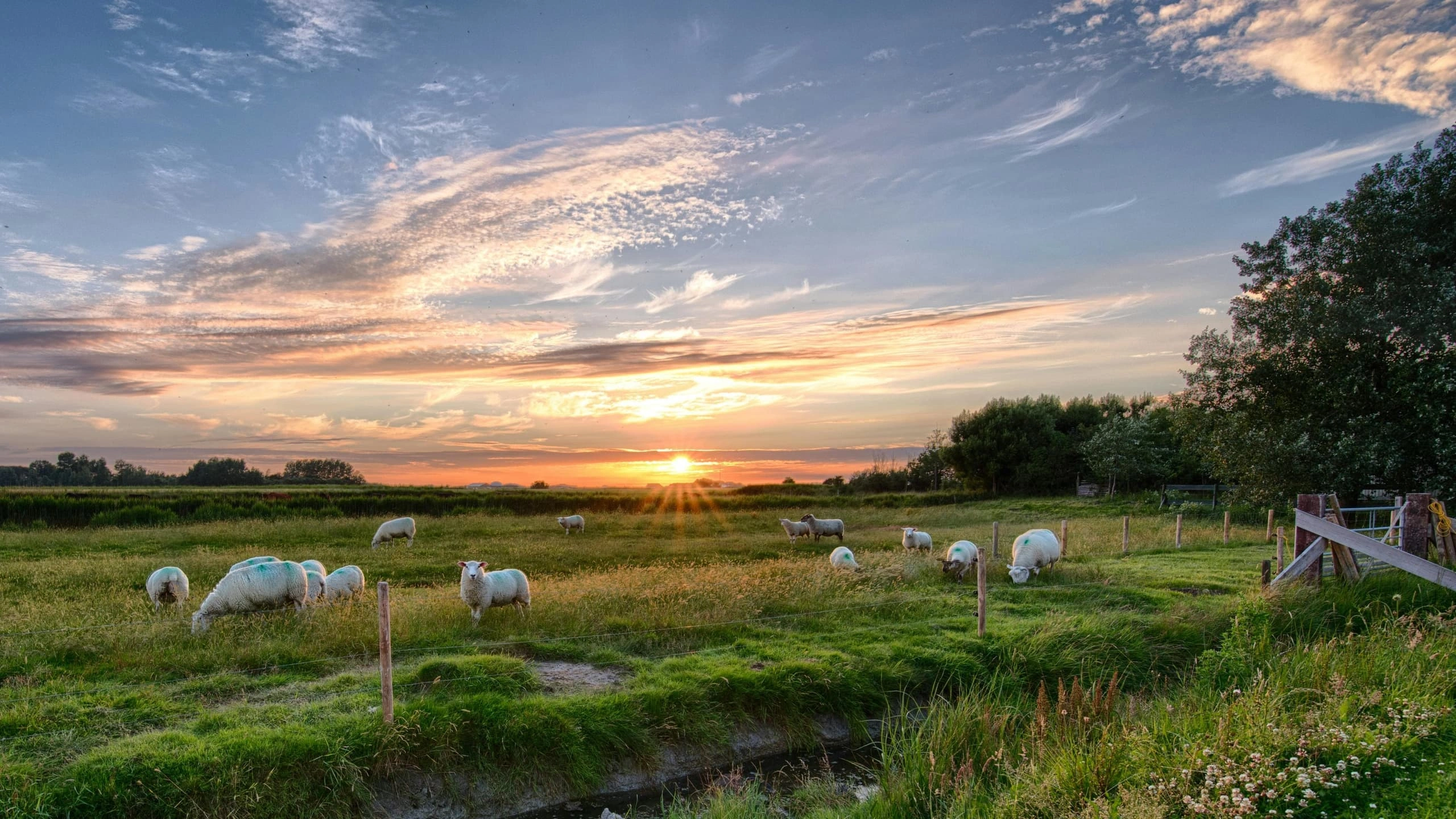
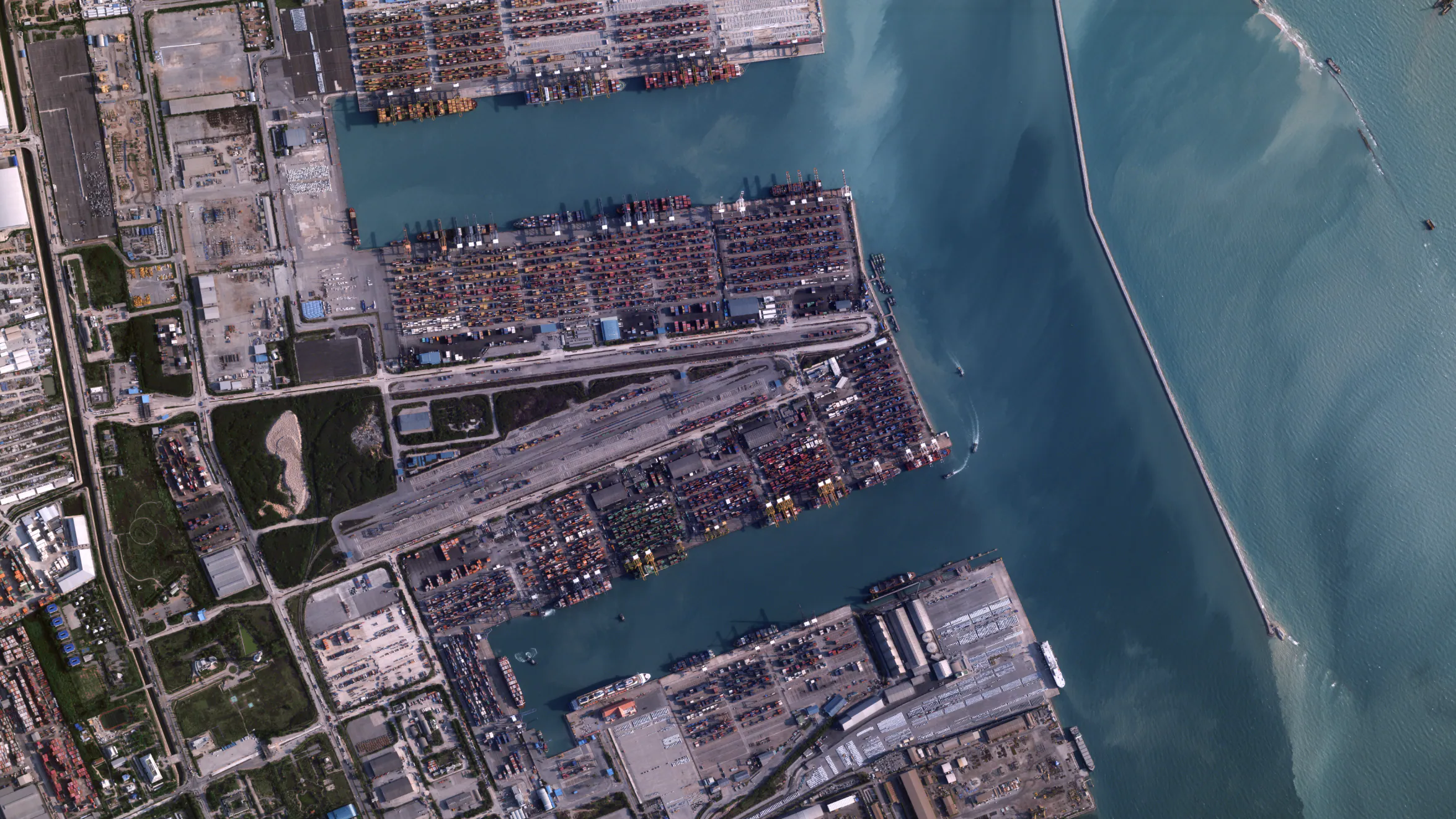
What a single port capture tells four different desks.
Storage tank fills
Weekly oil-storage estimates and throughput proxies for trading desks and energy analysts.
Vessel & trade activity
Berth occupancy, cargo movement and vessel activity - trade signals ahead of official releases.
Infrastructure change
Refinery turnarounds, terminal expansion, construction progress - covenant and collateral evidence for lenders.
Post-event damage
Rapid analysis-ready optical for hurricane, flood and fire damage assessment.
In the field
Real captures across trade, commodity and collateral.
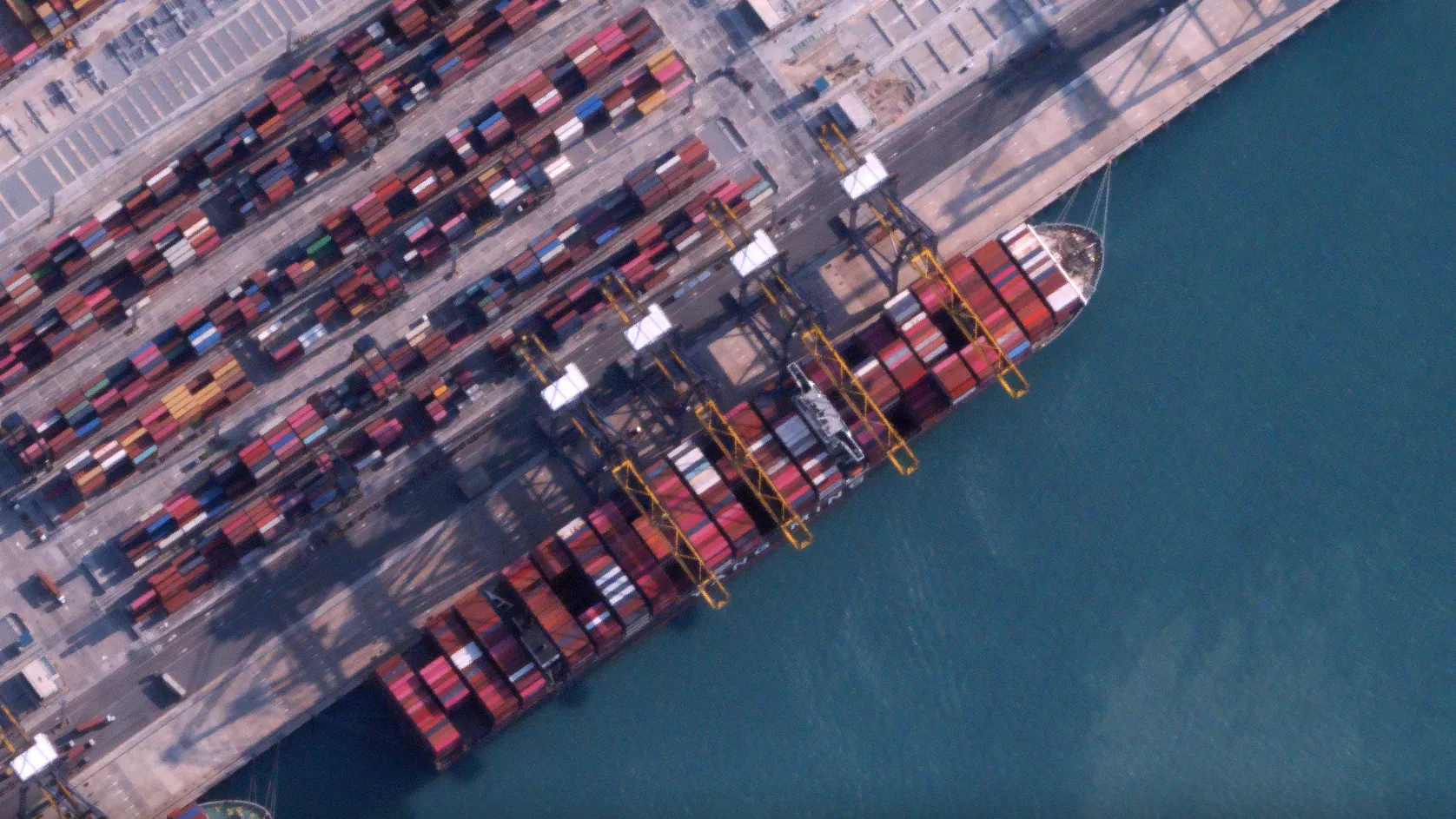
High-resolution optical · 6 Mar 2025
Trade signal · container vessel
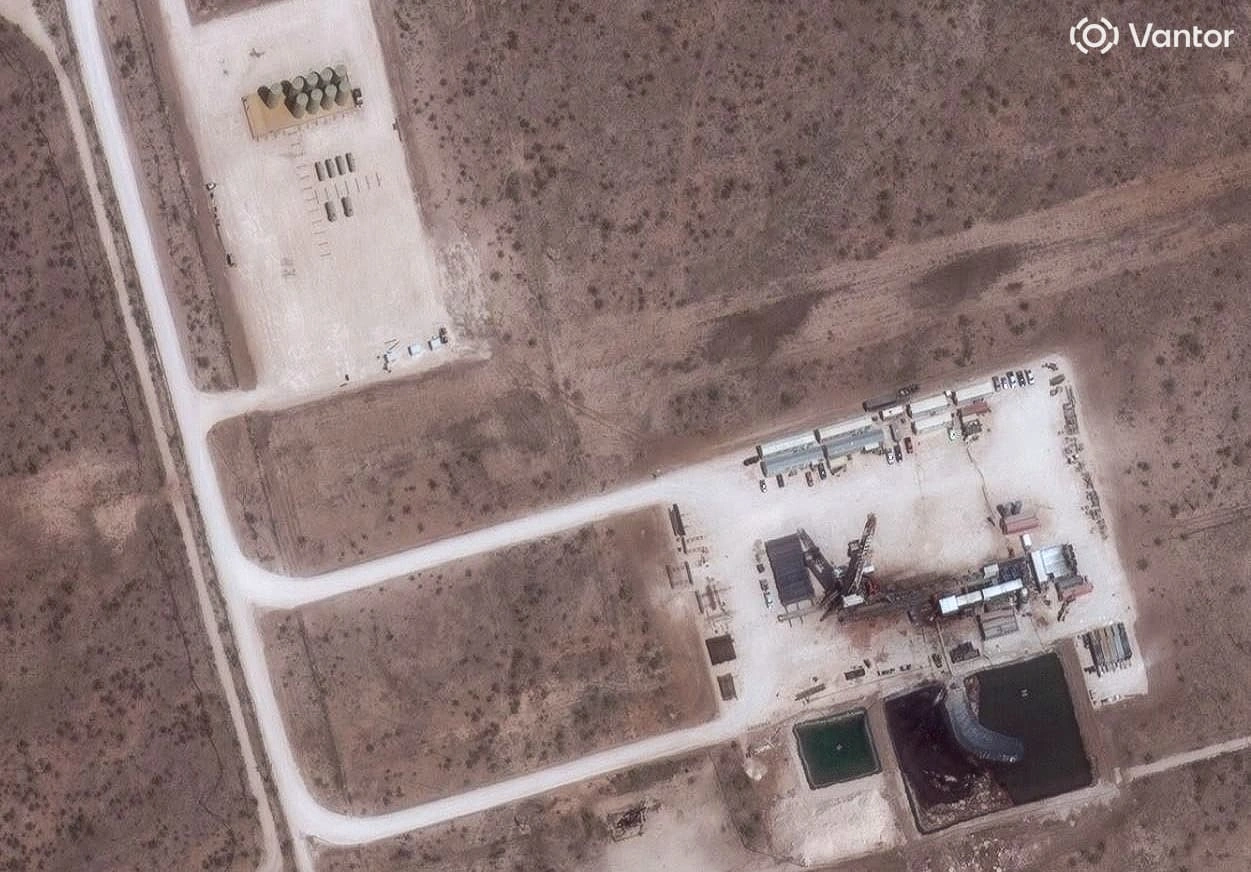
High-resolution optical · 3 Apr 2025
Commodity · Permian wellpad activity
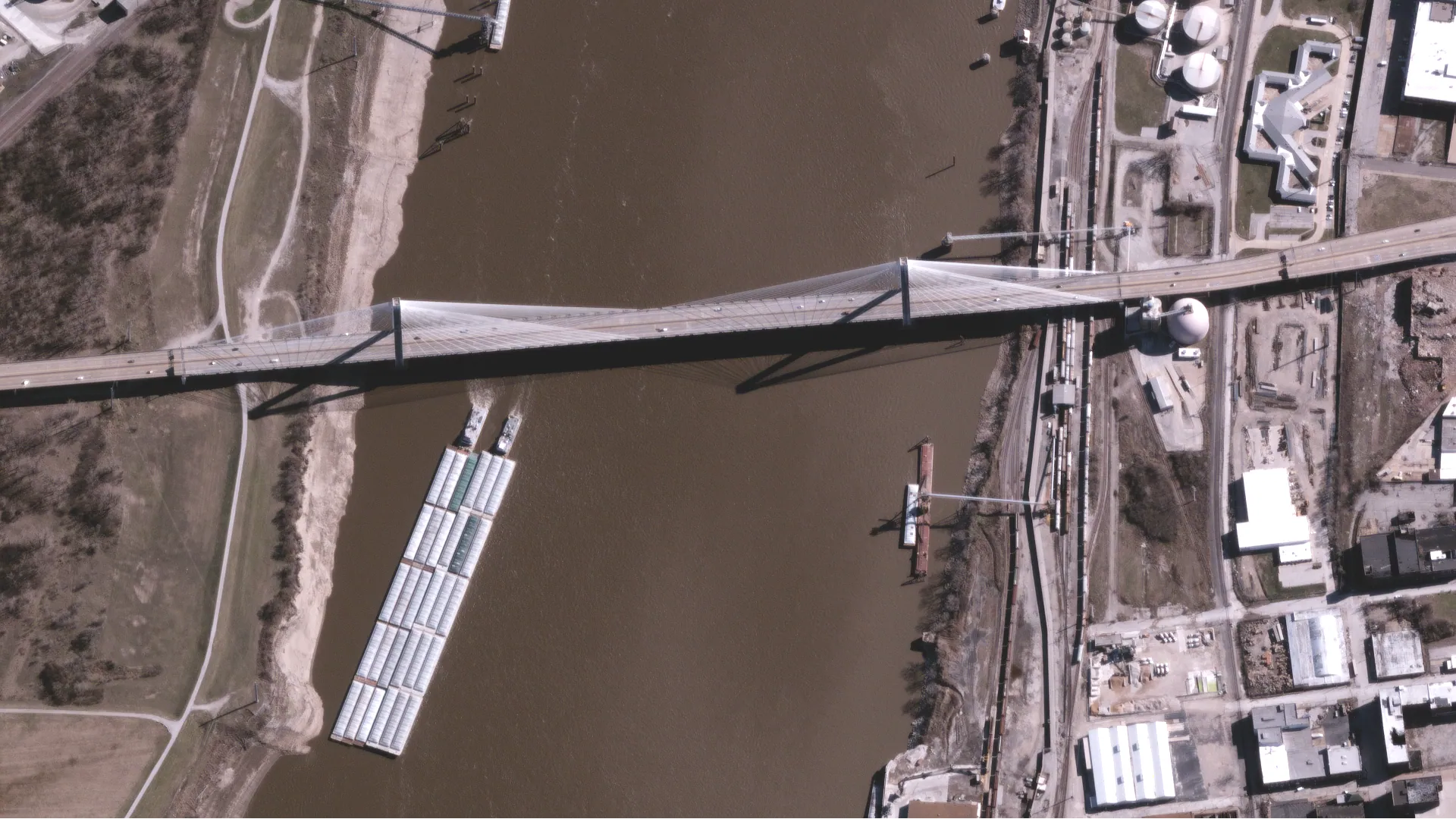
High-resolution optical · 16 Mar 2025
Collateral · infrastructure asset
Lifecycle
Underwrite, monitor, claim - one pipeline.
Three stages of the insurance-and-finance cycle, all served by the same tasking pipeline - from exposure enrichment at bind through portfolio monitoring to post-event claims.
01
Underwrite
Exposure enrichment at bind - property condition, bushfire fuel load, flood zones and cyclone corridors feeding CAT models and parametric trigger design.
- Exposure enrichment (OED / CEDE / EDM)
- Fuel load, flood-zone, heat proxies
- Historical event footprint libraries
- Parametric trigger design data
02
Monitor
Track loan use and portfolio assets on the cadence each line needs - drawdown checks monthly, commodity feeds weekly, disclosure refresh quarterly - replacing self-reported updates with independent evidence.
- Tranche drawdown validation
- Construction & crop-establishment confirmation
- Weekly commodity & trade feeds
- Quarterly disclosure refresh
03
Claim
Rapid post-event evidence - damage assessment and parametric trigger validation within the payout window.
- Property-scale damage assessment
- Parametric trigger validation
- Loss-adjusted evidence for audit
Data & methods
Analysis-ready imagery, elevation, and specialised data.
Every capture arrives fully processed - colour-balanced, orthorectified, atmospherically corrected and pansharpened - in the formats your risk, actuarial and quant teams already run.
Imagery & analysis-ready processing
- Optical & multispectral · 30 cm – 10 m commercial optical with 4 – 8 band multispectral, plus 10 – 30 m open-data archive for validation
- Colour balancing · radiometric harmonisation across captures so the imagery reads consistently scene-to-scene
- Orthorectification to control · sub-pixel geometric accuracy from ground control - imagery snaps to your existing layers
- Pansharpening & mosaicking · panchromatic fused with multispectral colour, then mosaicked into seamless area coverage
- Atmospheric correction (ATCOR) · surface-reflectance products with cloud and shadow masks - ready for indices and analytics
Elevation & risk modelling
- DEM, DSM & DTM · Elevation, surface and terrain models at 0.5 – 5 m resolution for flood, coastal-erosion and bushfire terrain modelling
- Hydro-enforced DTMs · Catchment flood modelling for parametric triggers and asset-level exposure mapping
- Slope & aspect · Inputs for bushfire behaviour, landslip and coastal-retreat modelling
- Cadence · Baseline at bind, refreshed post-event or annually for disclosure
Specialised data & delivery
- All-weather radar (SAR) · Flood and damage mapping when cloud or smoke blocks optical
- Hyperspectral · Narrow-band material identification for spills, corrosion and commodity anomalies
- Delivery formats · STAC, Cloud-Optimized GeoTIFF, GeoParquet, CSV feeds, bulk S3 or custom formats
- Platform integration · Direct to Verisk, RMS, Oasis, Snowflake, Databricks, ArcGIS, QGIS or Albatross
How it works
From brief to delivered feed in one pipeline.
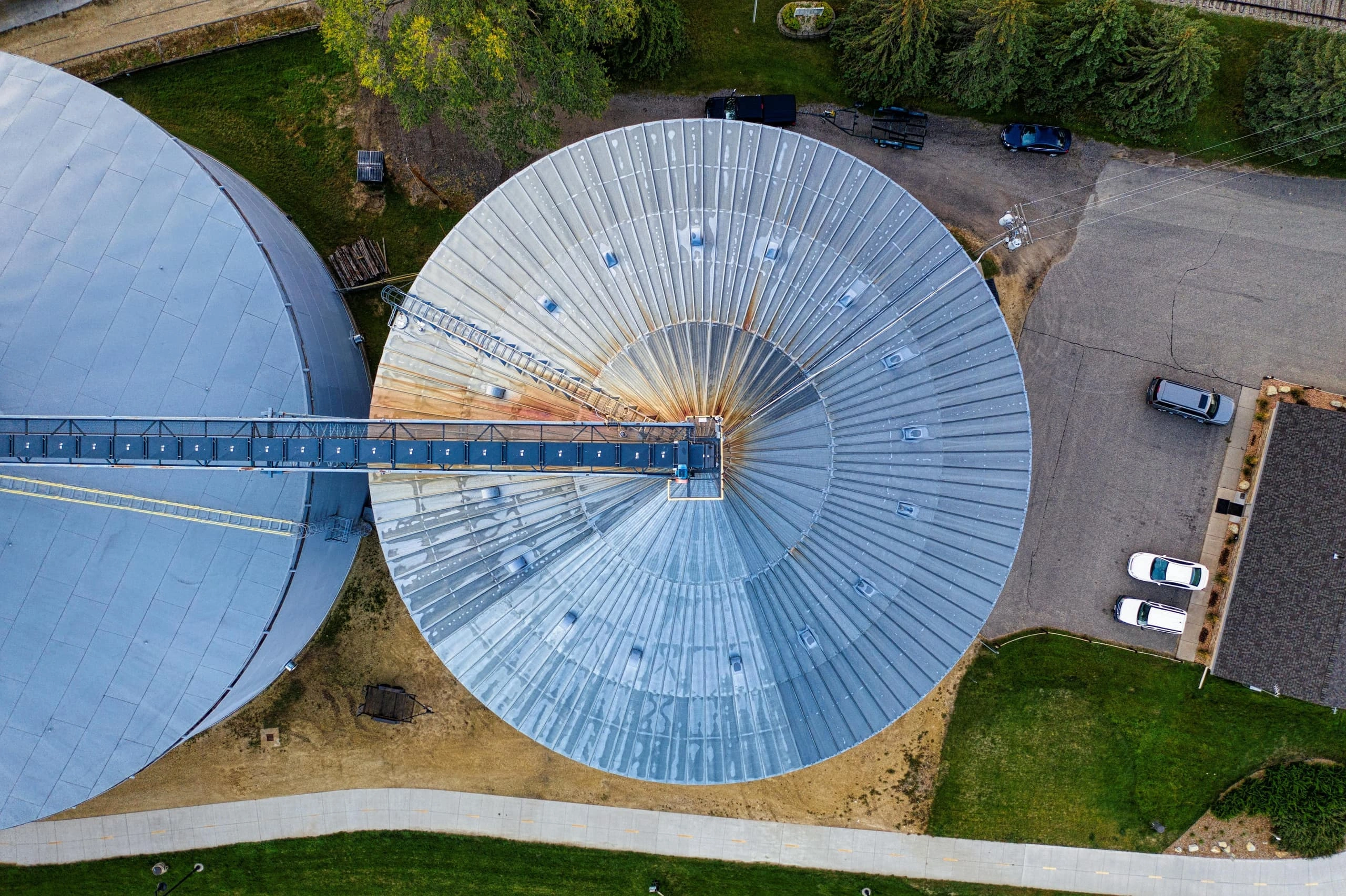
Same pipeline, same provenance - every line, every portfolio.
Define your portfolio, line or trigger
Upload a portfolio, catchment, trade corridor or trigger definition and tell us the workflow - exposure enrichment, parametric trigger, disclosure pack, commodity feed. We match sensors, cadence and format to it.Task or pull from archive
Our team searches archives across 20+ constellations and tasks the right sensor on the right days. Event-triggered tasking for hurricane, flood and bushfire windows runs automatically.Process to analysis-ready data
Captures are orthorectified, corrected and pansharpened into analysis-ready imagery. From there we derive change detection, construction-progress reports, crop-establishment scores, flood extents and disclosure layers - timestamped, audit-ready evidence.Deliver to your risk stack
Products land in Verisk, Moody’s RMS, Oasis, Snowflake, Databricks, ArcGIS, QGIS or Albatross, in the exposure and data formats your stack expects - timestamped and attributable for audit.
Outputs
Delivered across every line.
The concrete products finance and insurance teams receive across underwriting, monitoring, claims and disclosure.
Insurance & reinsurance
- Parametric trigger feeds
- Property claims triage packs
- OED / CEDE / EDM exposure enrichment
- Bushfire fuel-load risk layers
- Post-event damage & loss-adjustment packs
Lenders & project finance
- Timestamped loan-purpose validation reports
- Construction milestone confirmation imagery
- Greenhouse, solar & crop-establishment verification
- Tranche draw-down evidence packs
- Default early-warning indicators
Commodity & alt-data
- Weekly oil-storage tank levels
- Refinery throughput & turnaround
- Tanker & dark-fleet tracking
- Mine stockpile & production signals
- Crop-yield time series
Physical risk & exposure
- Asset & portfolio physical-risk mapping
- Bushfire, flood & cyclone exposure layers
- Annual or quarterly exposure refreshes
- Green bond & SLL asset verification
- Carbon project canopy & biomass confirmation
Platform
One tasking pipeline, every desk.
Coordinate imagery, elevation and specialised data tasking across underwriting, claims, commodity and disclosure workflows, with centralised budgets, multi-team access and audit-ready archives.
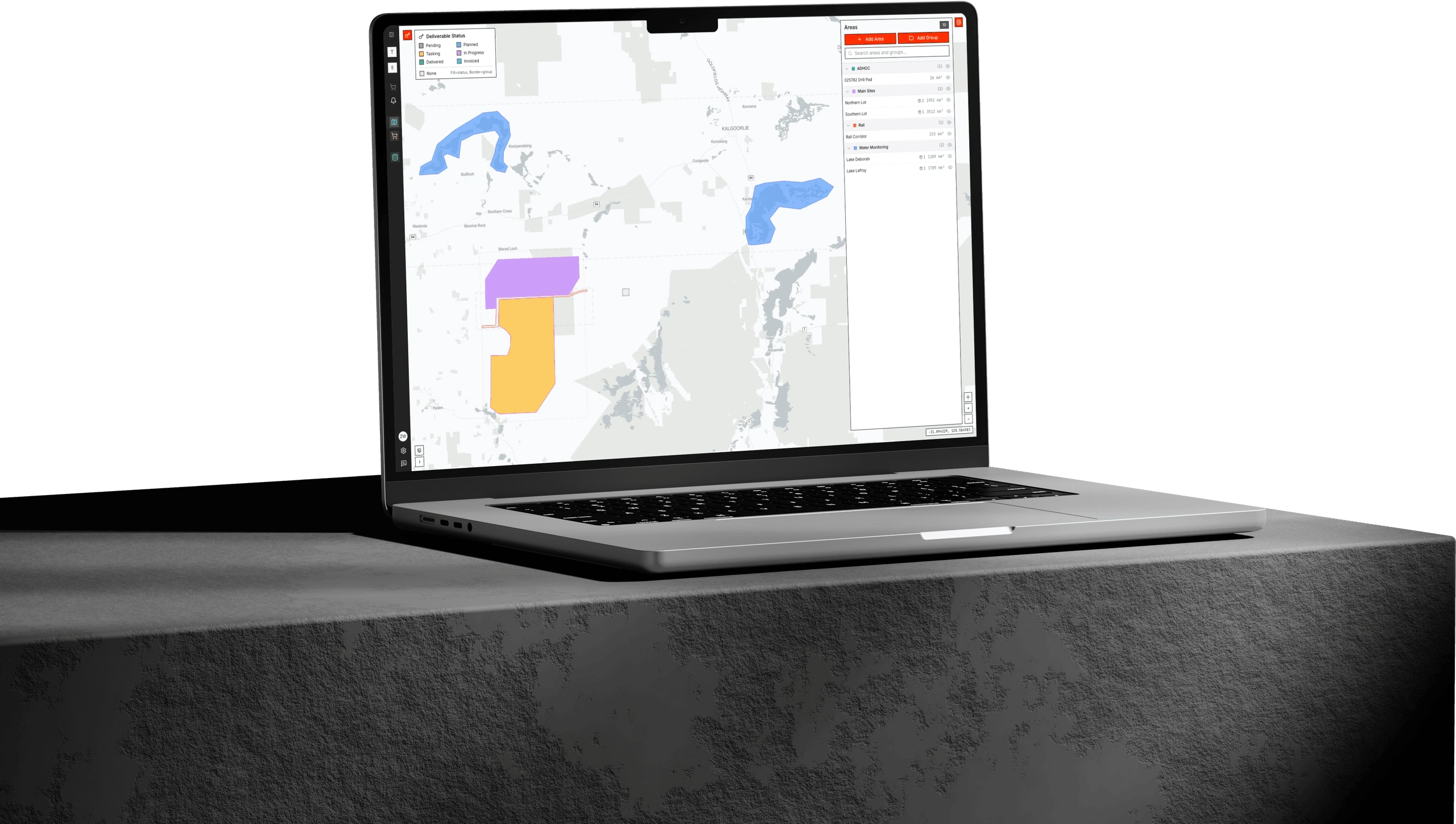

Albatross is where every desk orders and manages satellite data. Submit tasking, approve budgets, track deliveries and keep a timestamped spatial record, from post-event damage packs and parametric trigger feeds to weekly commodity data.
Products
The data products behind the page.
Products
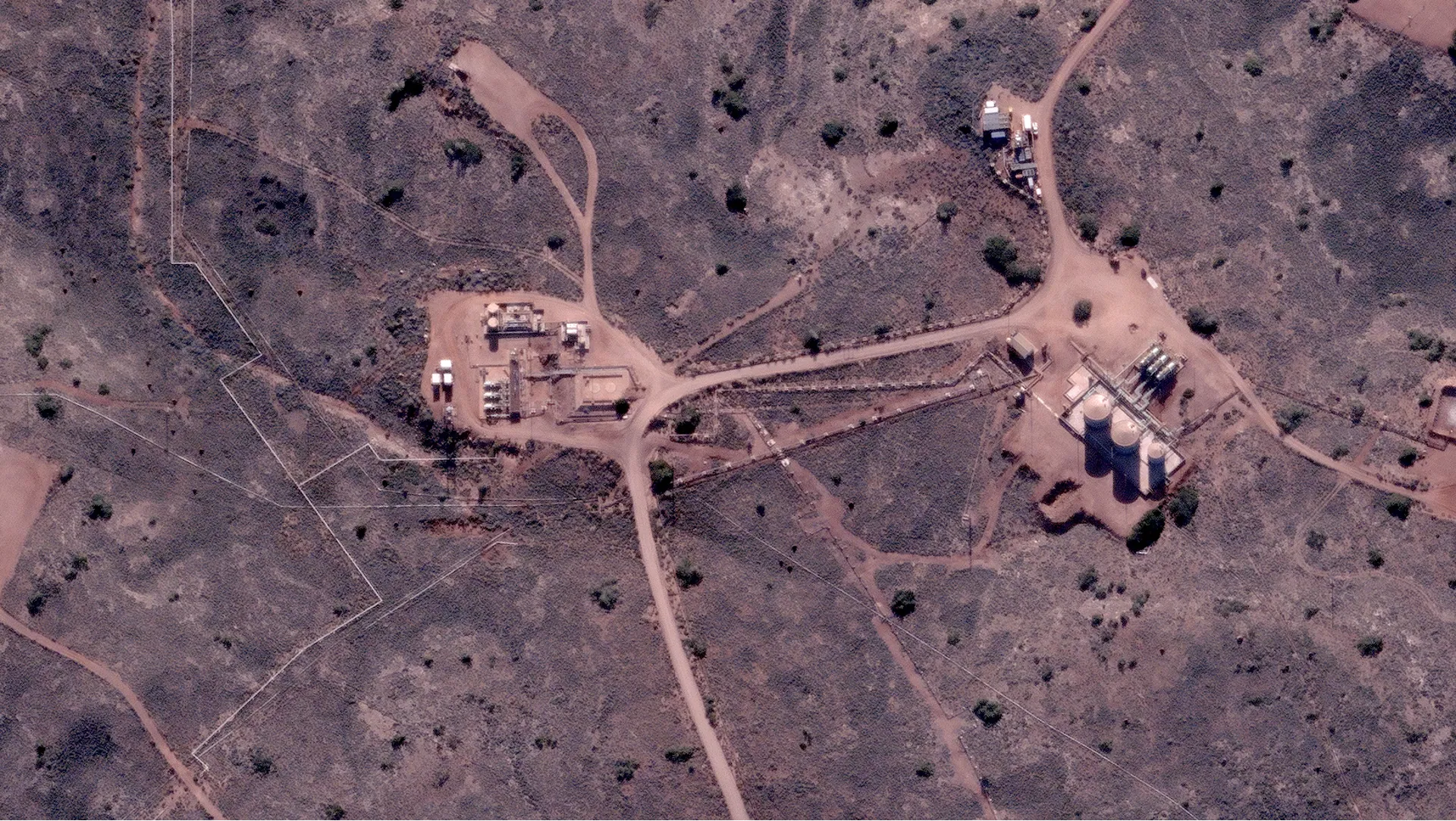
Satellite Imagery
Analysis-ready optical and multispectral imagery for catastrophe modelling, claims triage, commodity alt-data and physical-risk disclosure, delivered in the exposure formats your stack runs.
Products
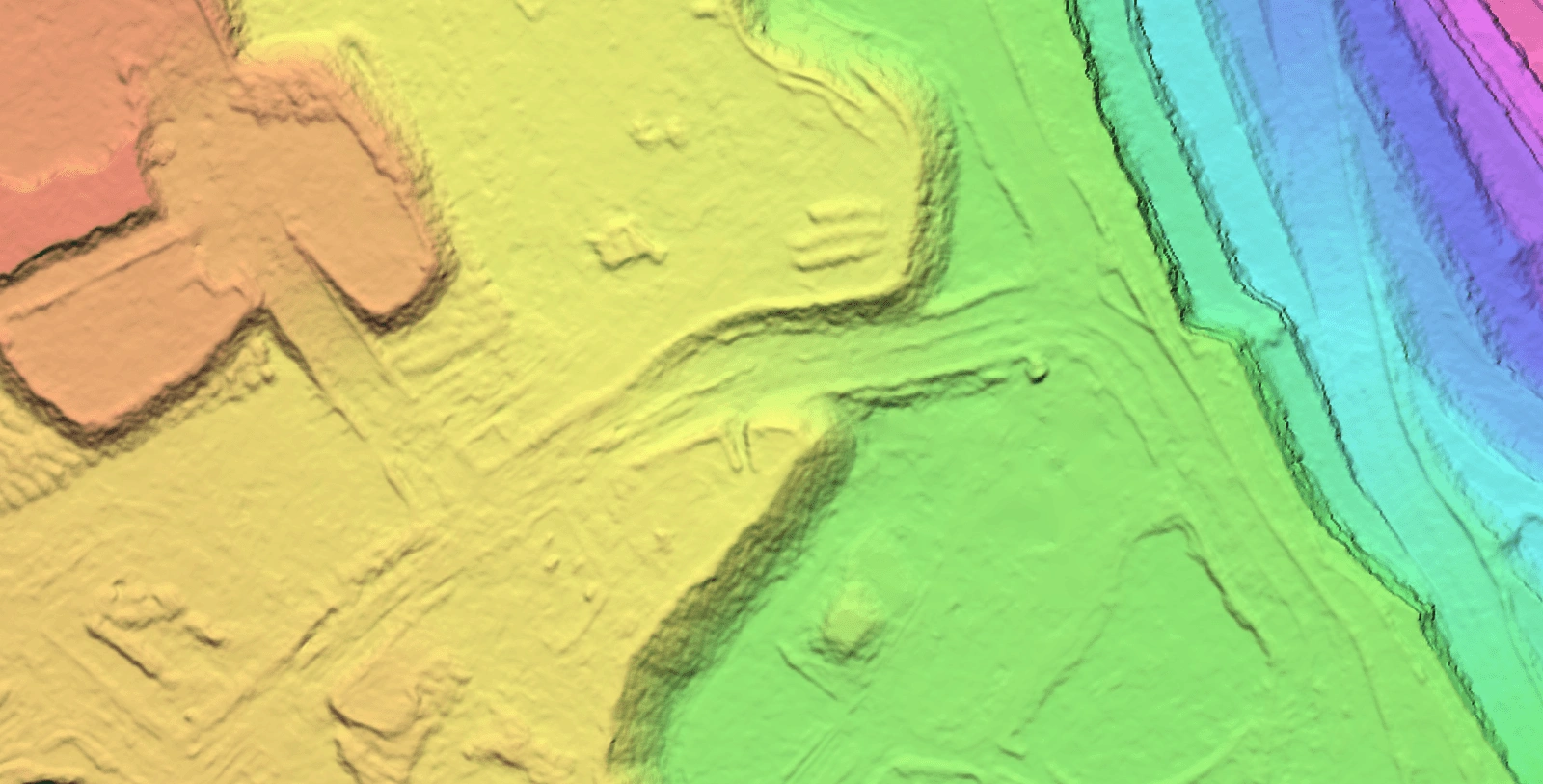
Digital Elevation Models
Elevation products from 0.5m to 5m resolution for flood modelling, coastal-erosion exposure, bushfire terrain and asset baselines, aligned to GDA2020.
Verify what's actually on the ground
Talk to the team about satellite data for your desk, from catastrophe modelling and claims triage to commodity signals and physical-risk disclosure.