Solutions / Industries / Mining
Satellite imagery for mining.
High-resolution imagery, elevation models and analytics for every stage of your operation, from exploration through to rehabilitation.
Mining data, unified.
The problem
Exploration, operations, compliance and the board all work from different evidence. Drone surveys, ad-hoc aerial flights and site visits produce patchy records that don’t scale across a portfolio.
The Terrabit approach
Terrabit gives every team the same dataset: analysis-ready imagery, elevation models and analytics, delivered straight into your GIS or through our Albatross platform. One source of truth from exploration to rehabilitation.
Lifecycle
One platform across the mine lifecycle.
Three pillars - each matched to the sensors, cadence and analytics that actually answer the question.
01
Explore
Multispectral and high-resolution optical imagery to map alteration signatures and focus ground programmes on the strongest targets. Hyperspectral coverage is available where deeper mineral discrimination is needed.
- Multispectral mineral targeting
- Pansharpened high-resolution optical
- Historical archive compilation
- Tenure-wide base map refresh
02
Operate
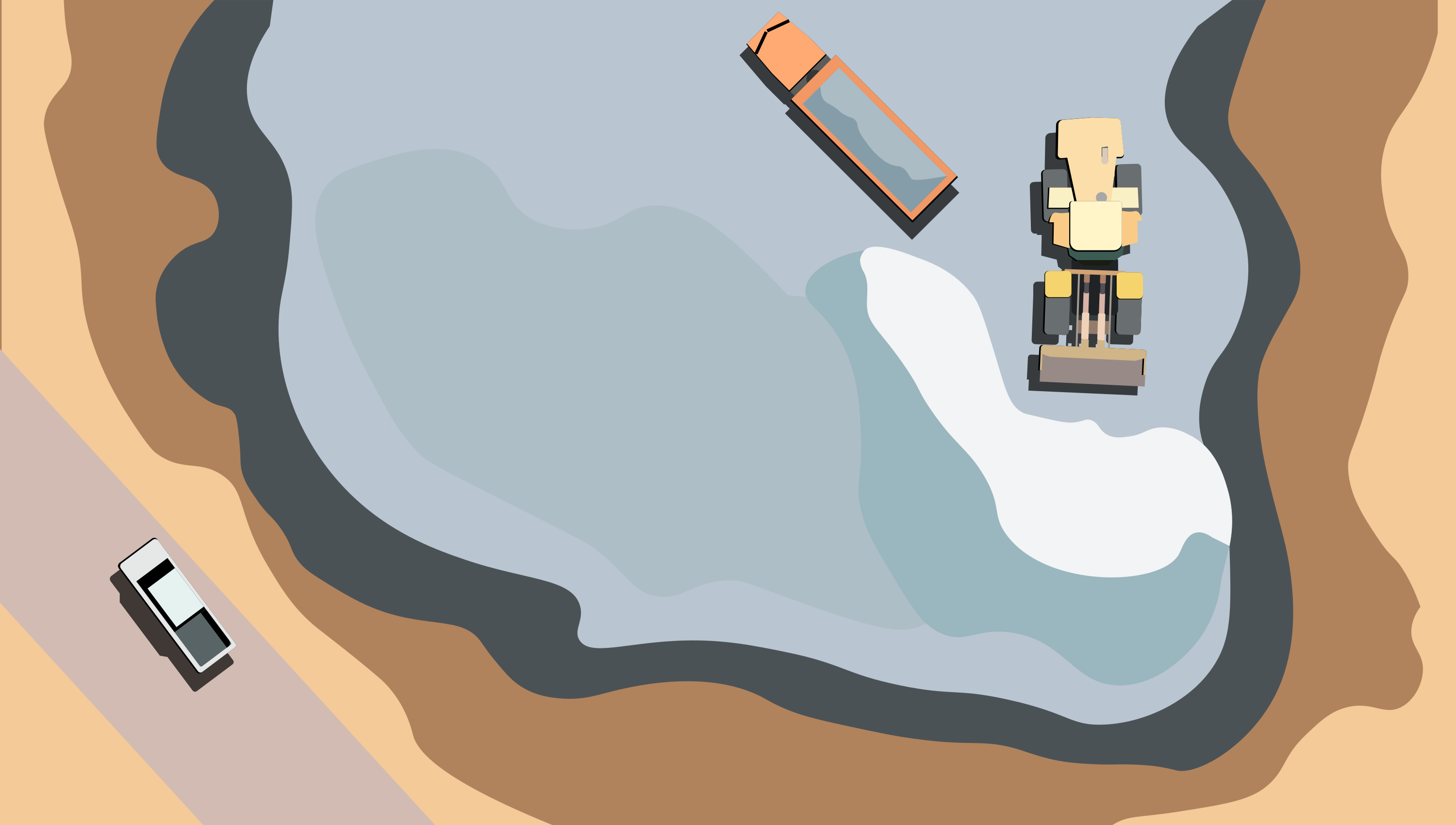
Scheduled imagery to track change on pits, haul roads and infrastructure, with elevation models for volumes and digitisation layers, delivered straight into your GIS.
- Stockpile & pit volumes from elevation models
- Optical change detection (weekly)
- Mine site digitisation & base maps
03
Restore
Vegetation health indices tracked over multi-year time series to quantify rehabilitation recovery, giving you defensible evidence for ESG and JORC-aligned reporting.
- NDVI / EVI rehabilitation tracking
- Disturbance footprint reporting
- Water quality & pollution monitoring
- ESG & JORC evidence support
Where mining evidence tends to break
Disconnected data
Drone, aerial and ground surveys each record sites differently, so there is no single view across the portfolio.
Reactive monitoring
Change on pits, stockpiles and tailings is caught after the fact, not while it develops.
Slow audit trails
Evidence packs for regulators, insurers and boards take weeks to assemble from scattered sources.
Uneven rehabilitation
Vegetation recovery is surveyed only sporadically, so multi-year compliance claims are hard to defend under audit.
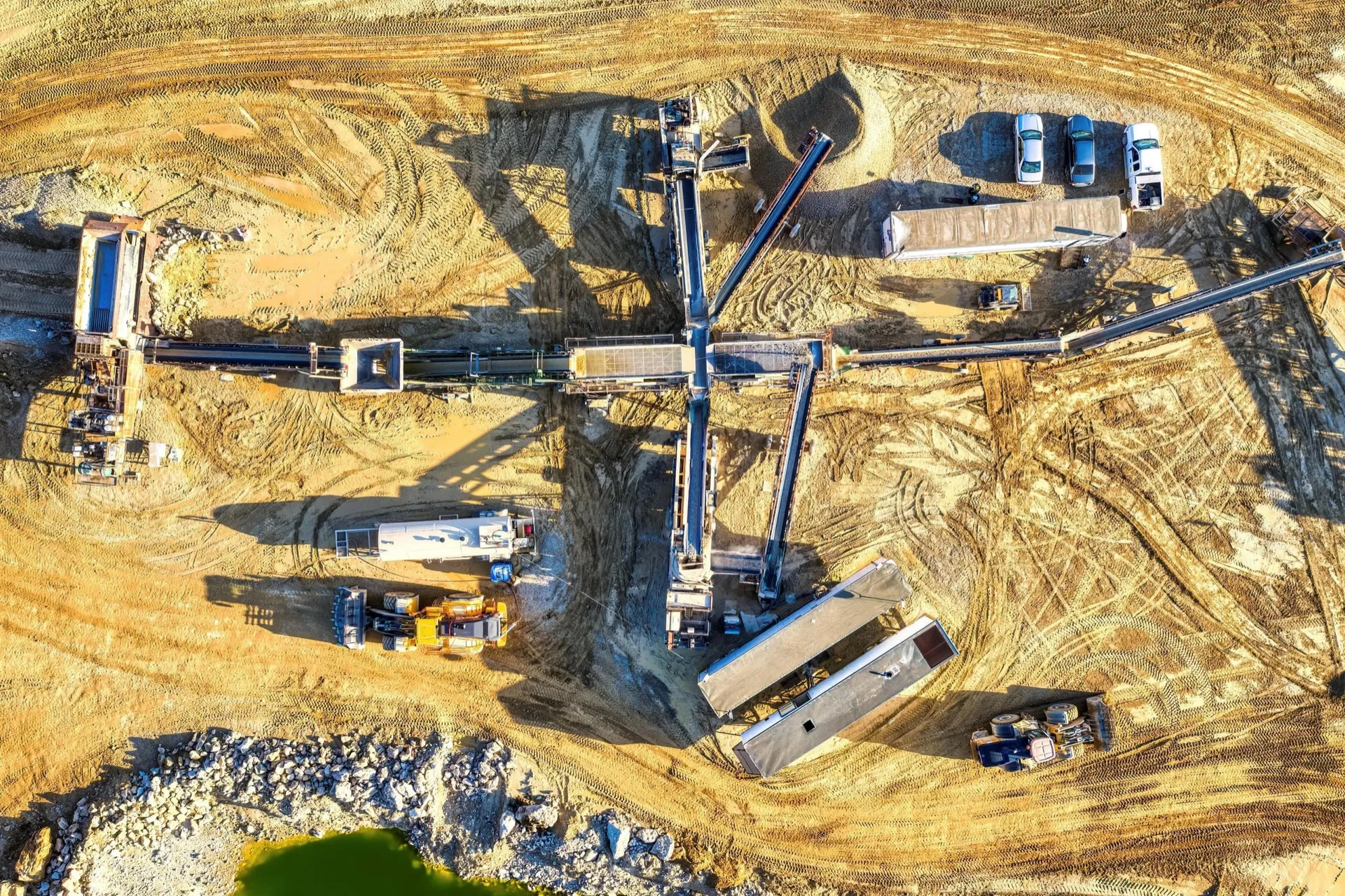
- Resolution
- 30cm
- DEM resolution
- 0.5m
- Cadence
- Weekly
- Delivery
- ARD
High-resolution commercial optical, pansharpened and atmospherically corrected for asset-level detail.
Stereo-derived digital surface models for pit and stockpile volumetrics.
Priority tasking through to scheduled archive - same area, same provenance, every capture.
Analysis-ready data (ARD) - colour-balanced, orthorectified to control, mosaicked and ATCOR-corrected - direct support to ArcGIS, QGIS, S3, SFTP or Albatross.
Optical imagery
What a single capture tells you about a site.
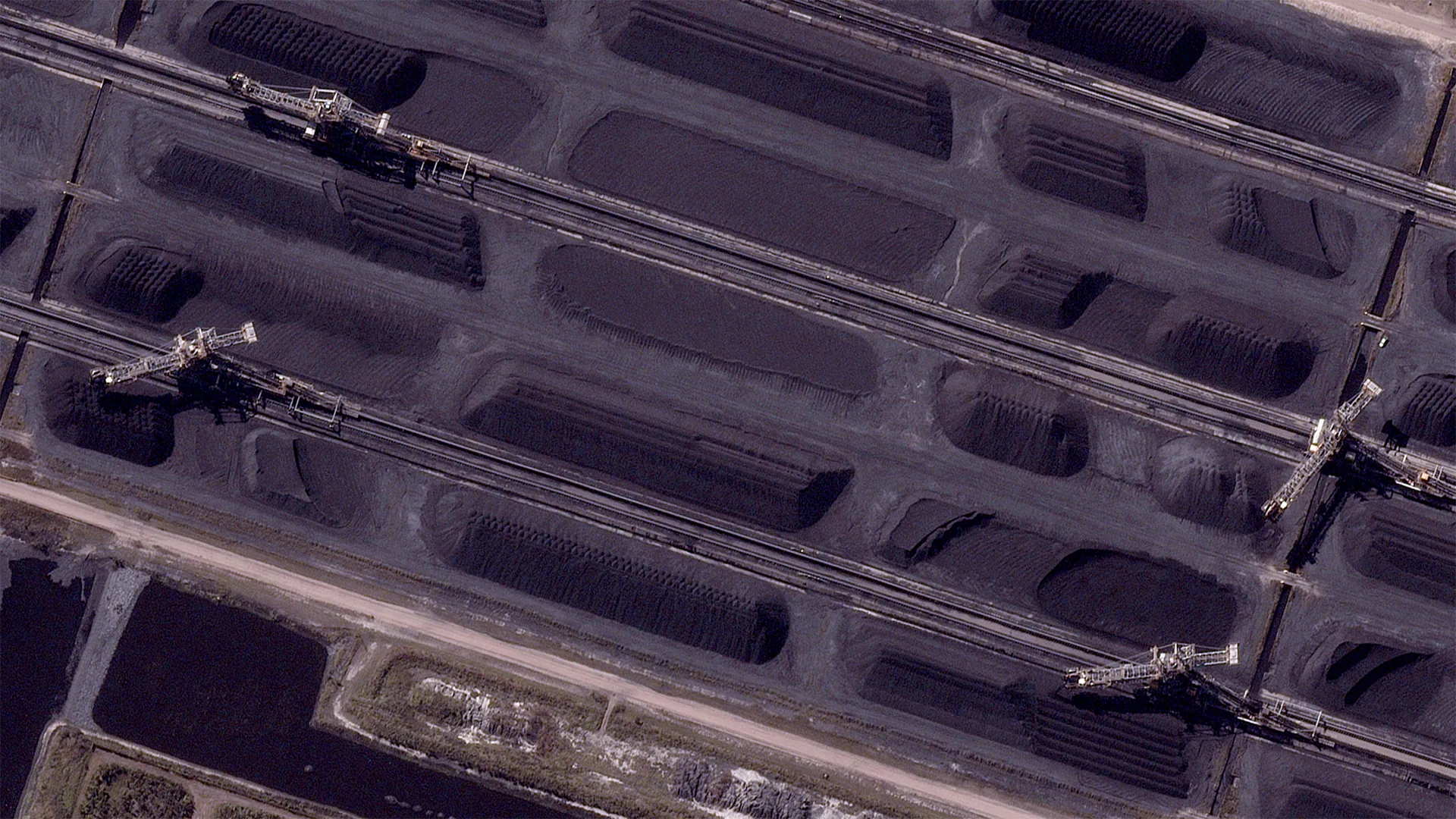
Stockpile reshape
Volume change, material movement and infill between capture dates.
Haul-road progression
New alignments, widening and maintenance cycles across the site.
Infrastructure build-out
Conveyor, pad, process-plant and accommodation-camp change.
Environmental encroachment
Vegetation disturbance and water encroachment.
Capabilities
Capabilities across the mine lifecycle
Mineral exploration
Multispectral and high-resolution optical imagery across your tenure, with hyperspectral coverage where alteration mineralogy needs deeper discrimination. Archive stacks and targeted new captures narrow ground programmes to the highest-probability copper, gold, lithium and rare-earth targets.
Change detection & site digitisation
Scheduled imagery tracks change across haul roads, infrastructure and disturbance. Paired with feature extraction, it refreshes base maps and digitises site assets into GIS-ready layers your team already uses.
Vegetation mapping & rehabilitation
Vegetation indices such as NDVI, derived from open-data archives and high-resolution capture, quantify recovery against regulatory baselines across years, not site visits - timestamped, reproducible evidence for ESG and JORC reporting.
Tailings, slope & safety monitoring
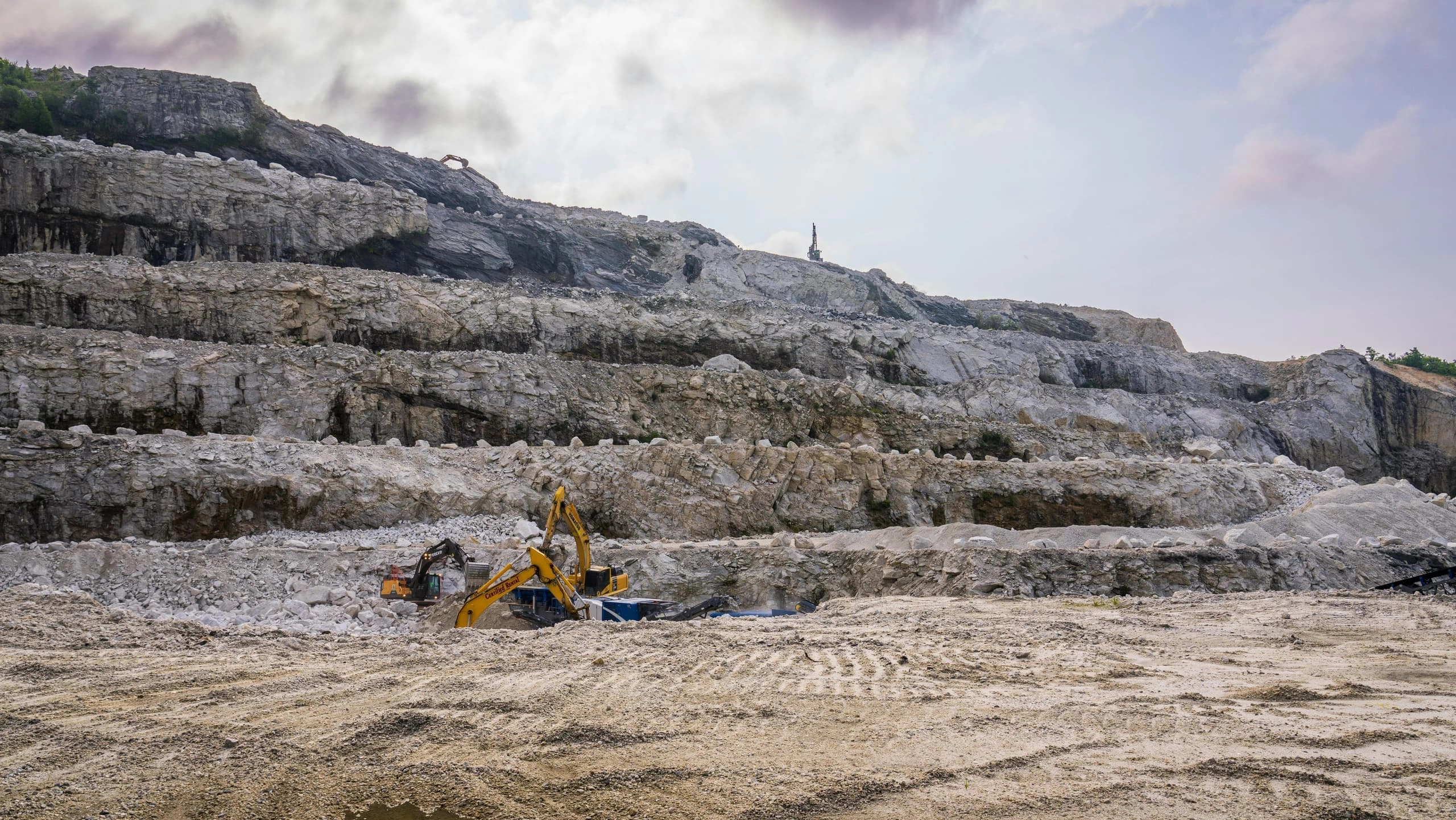
Routine optical change detection over high-walls, tailings and infrastructure, with all-weather radar where geotechnical questions need ground-deformation measurement between inspections.
In the data
Real captures across every data type.
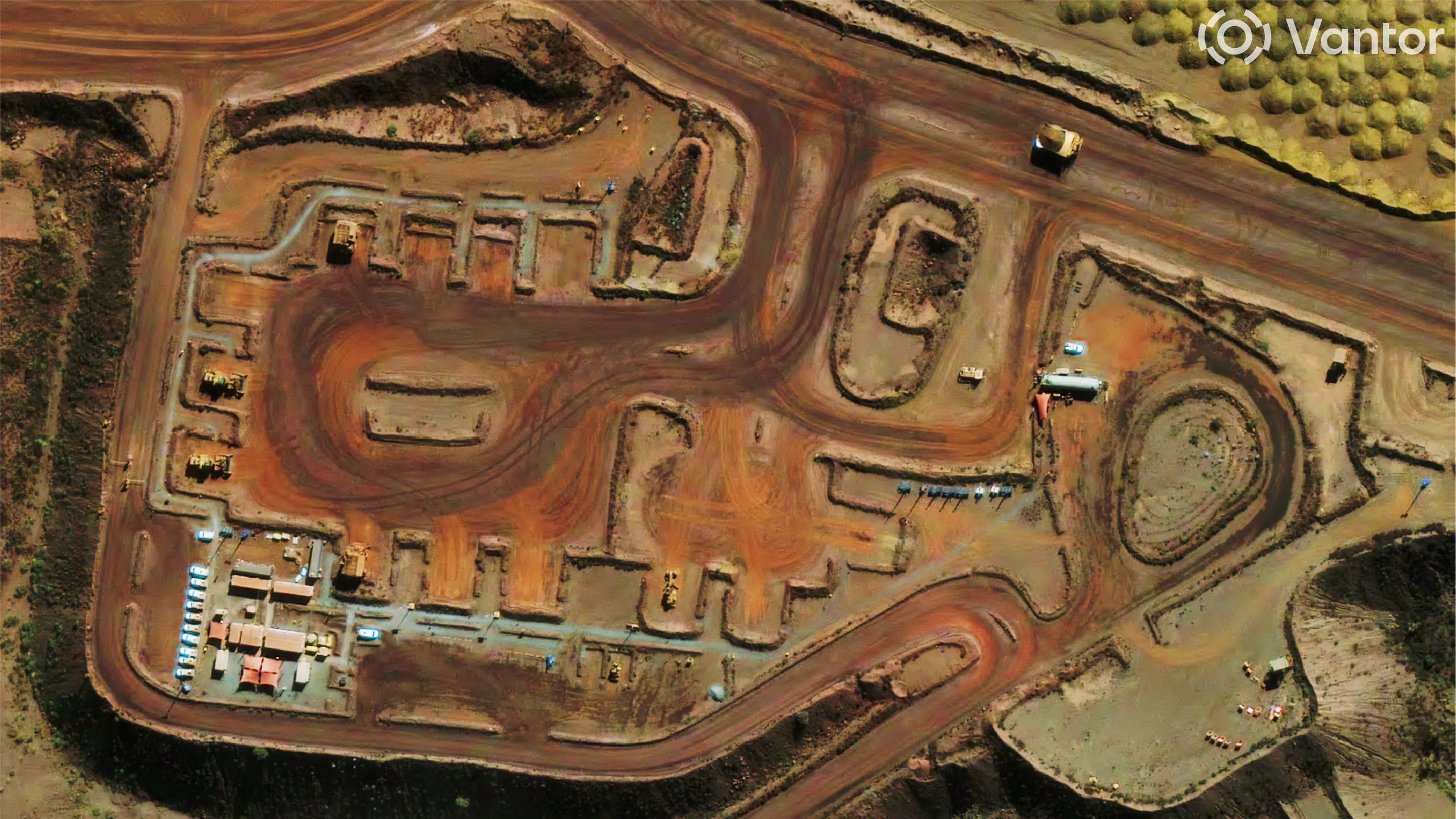
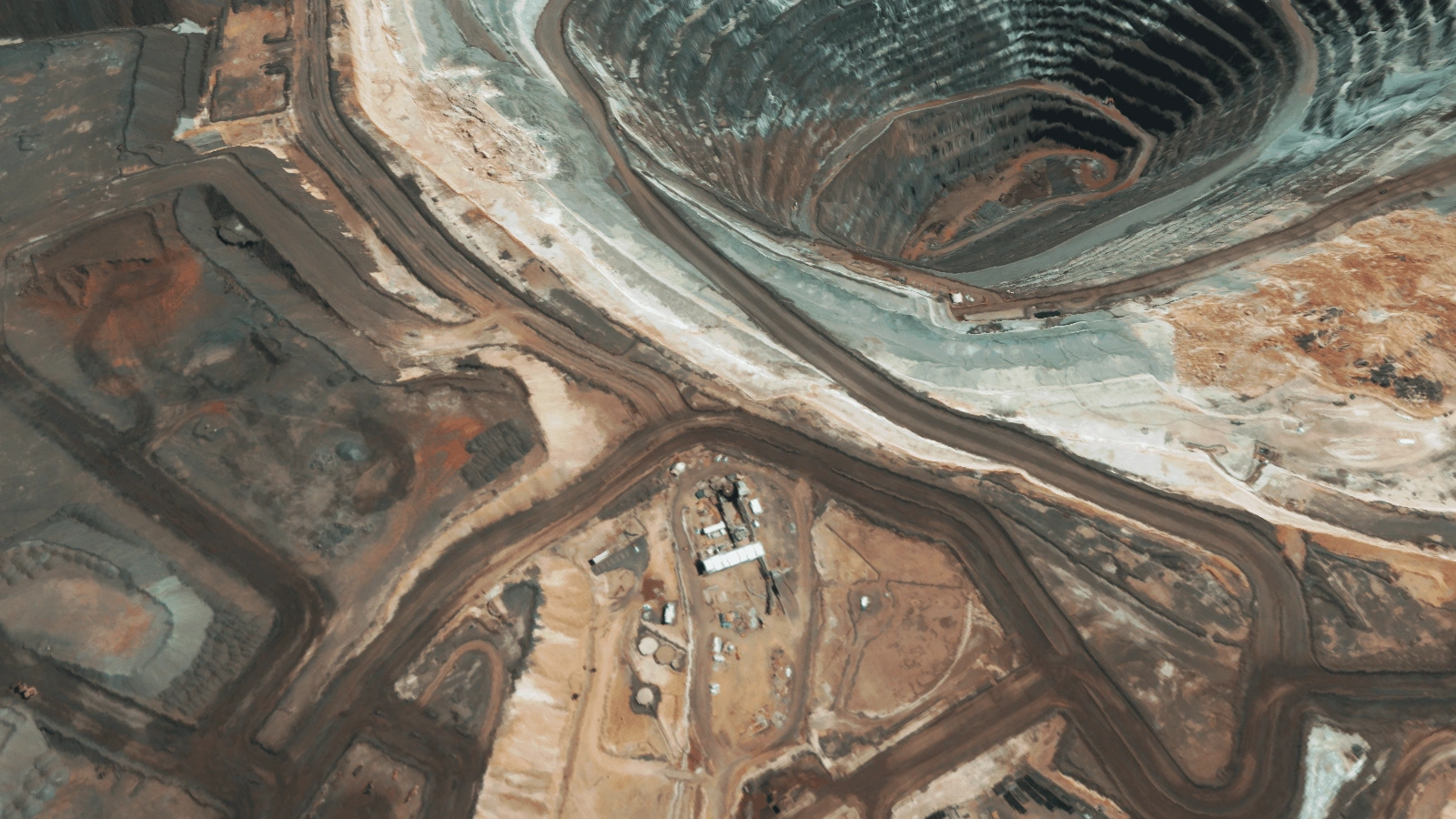
High-resolution optical · WorldView-Legion
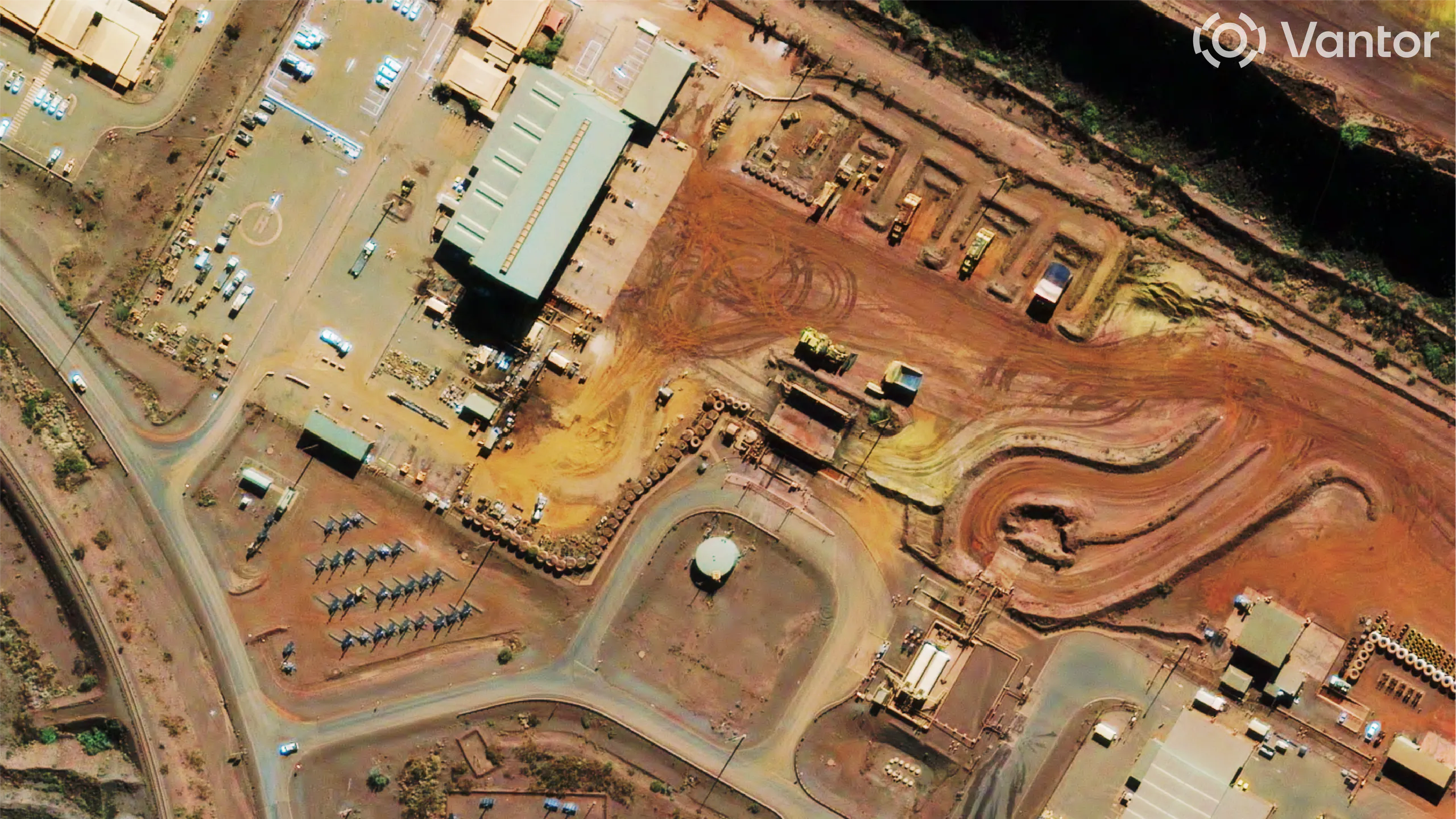
Optical · mine site high-res
Stereo-derived · 0.5m DSM
Elevation · pit & stockpile volumetrics
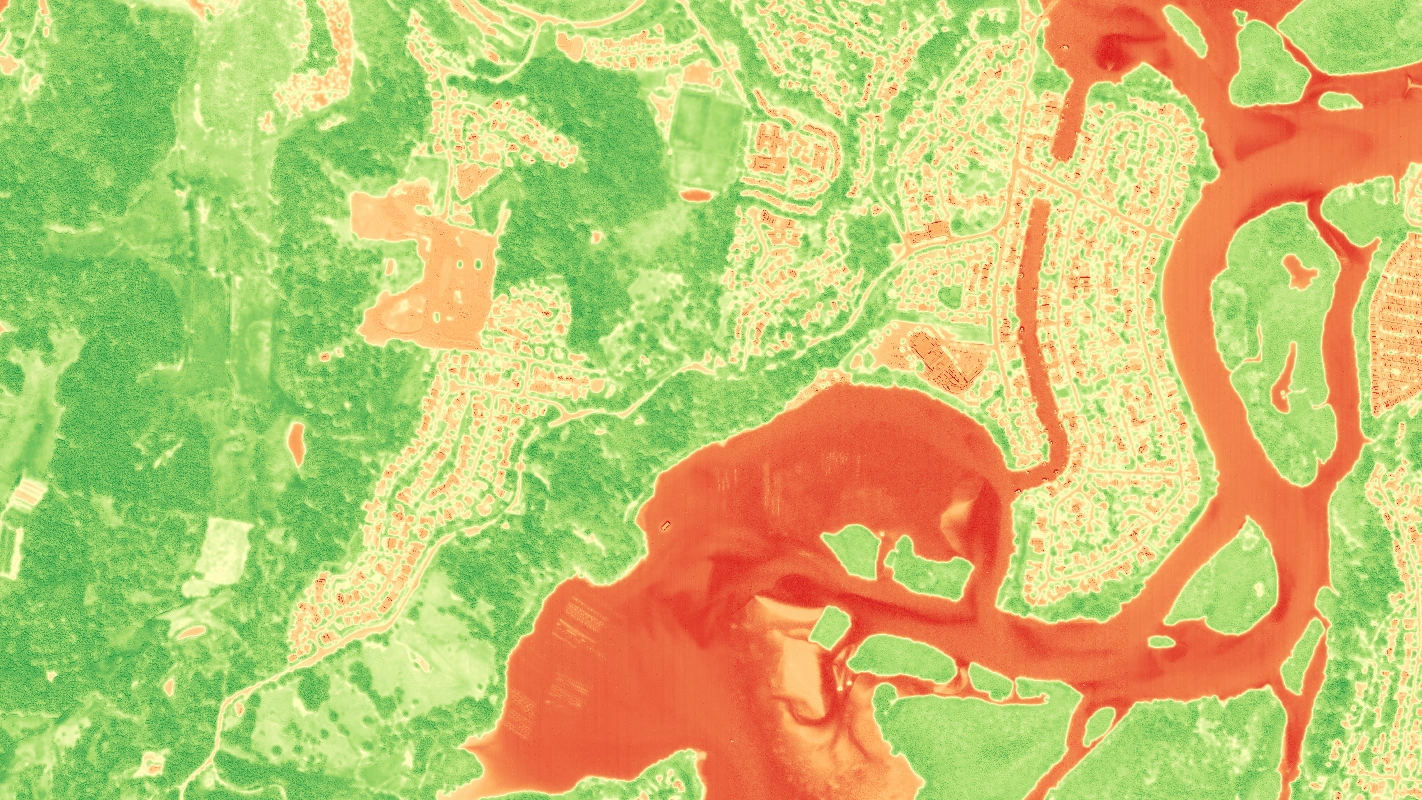
NDVI · WorldView-Legion · Tweed NSW
NDVI · NSW environmental monitoring
Data & methods
Analysis-ready imagery, elevation, and specialised data.
Every capture arrives fully processed - colour-balanced, orthorectified, atmospherically corrected and pansharpened - so it slots straight into your workflow. Specialised data follows where the question needs it.
Imagery & analysis-ready processing
- Optical & multispectral · 30 – 50cm panchromatic and 4 – 8 band multispectral for asset-level detail and vegetation
- Colour balancing · radiometric harmonisation across captures so the imagery reads consistently scene-to-scene
- Orthorectification to control · sub-pixel geometric accuracy from ground control - imagery snaps to your existing layers
- Pansharpening & mosaicking · panchromatic fused with multispectral colour, then mosaicked into seamless area coverage
- Atmospheric correction (ATCOR) · surface-reflectance products with cloud and shadow masks - ready for indices and analytics
Elevation & volumetrics
- Stereo · DSM and digital terrain model (DTM) generation from single-pass capture
- DEM, DSM & DTM · Digital surface (DSM) and digital terrain (DTM) models up to 0.5m resolution, sub-metre vertical accuracy
- Volumetric differencing · pit, stockpile, waste dump and berm volumes
- 3D derivatives · slope, aspect, hillshade and drainage products
- Cadence · scheduled monthly or on-demand after storms, slips, incidents
Specialised data & delivery
- Synthetic aperture radar (SAR) & interferometric SAR (InSAR) · all-weather radar and ground deformation when geotechnical questions require it
- Hyperspectral · narrow-band material identification for alteration and mineral mapping
- Custom analytics · change detection, NDVI / EVI time-series, classification and feature extraction tailored to your workflow
- Delivery formats · Cloud-Optimized GeoTIFF (COG), SpatioTemporal Asset Catalog (STAC), GeoPackage, or custom formats delivered to fit your workflow and platform integration needs
- Integration · ArcGIS, QGIS, Mapbox, S3, SFTP and Albatross - no conversion step
How it works
From question to delivered product in one pipeline.
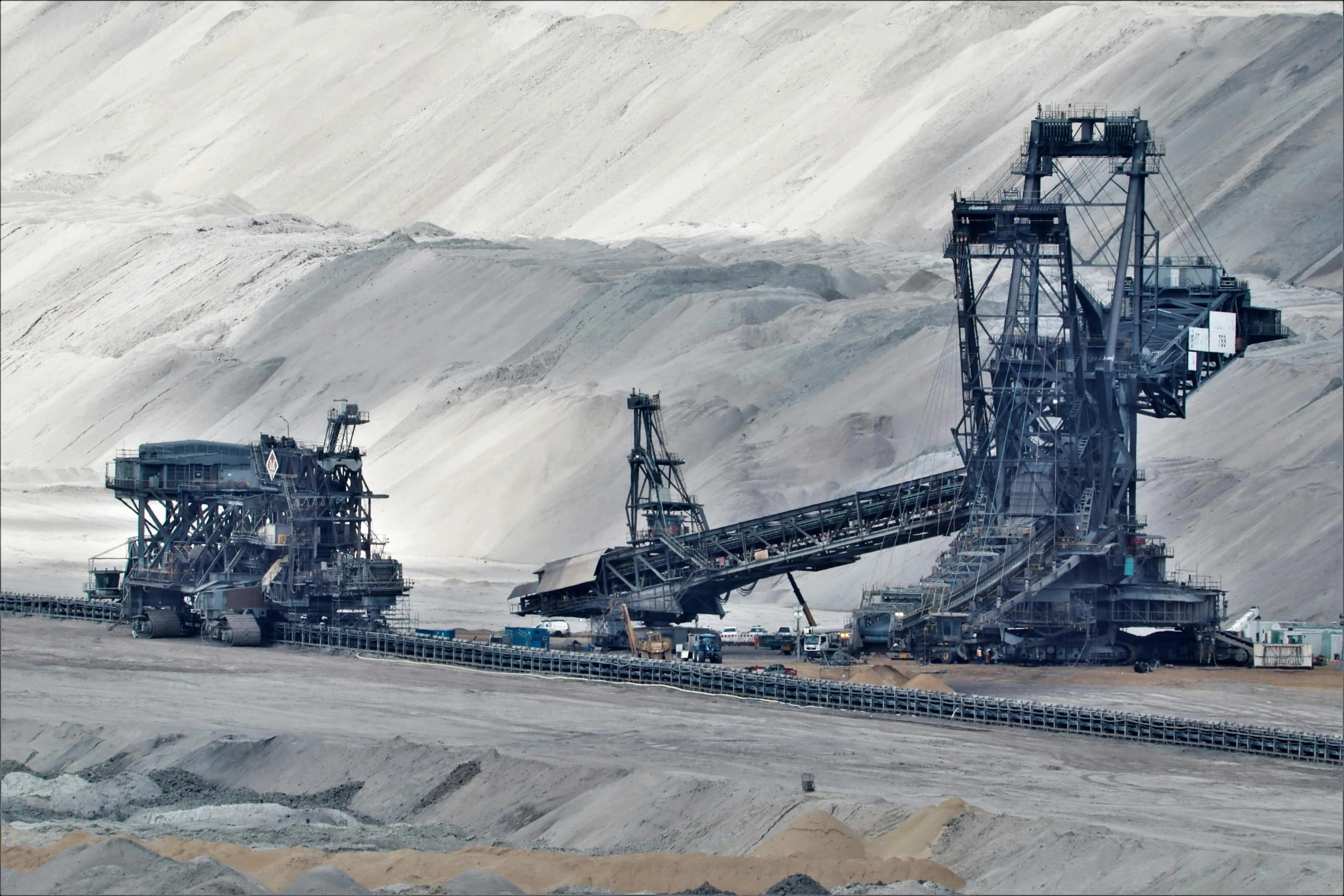
Same pipeline. Same provenance. Every site, every stage.
Define your area & question
Upload a shapefile, KML or GeoJSON for your tenure, lease or site and tell us the question - exploration targeting, monthly stockpiles, quarterly rehabilitation. We match sensors, cadence and processing to it.Task or pull from archive
Our team searches archives across 20+ constellations and tasks the right sensor on the right day. You approve the plan and budget in one step - no procurement loop.Process to analysis-ready products
Captures are orthorectified, corrected and pansharpened into analysis-ready imagery. From there we derive elevation models, change layers, volumetrics, vegetation time series and feature extraction.Deliver to your stack
Products land directly in ArcGIS, QGIS, S3, SFTP or Albatross, in the formats your platform expects - timestamped, attributable and audit-ready, with no conversion step.
Platform
One imagery pipeline, every mine.
Coordinate imagery, elevation and specialised data tasking across every site and stakeholder, with centralised budgets, reporting archives and multi-user access.
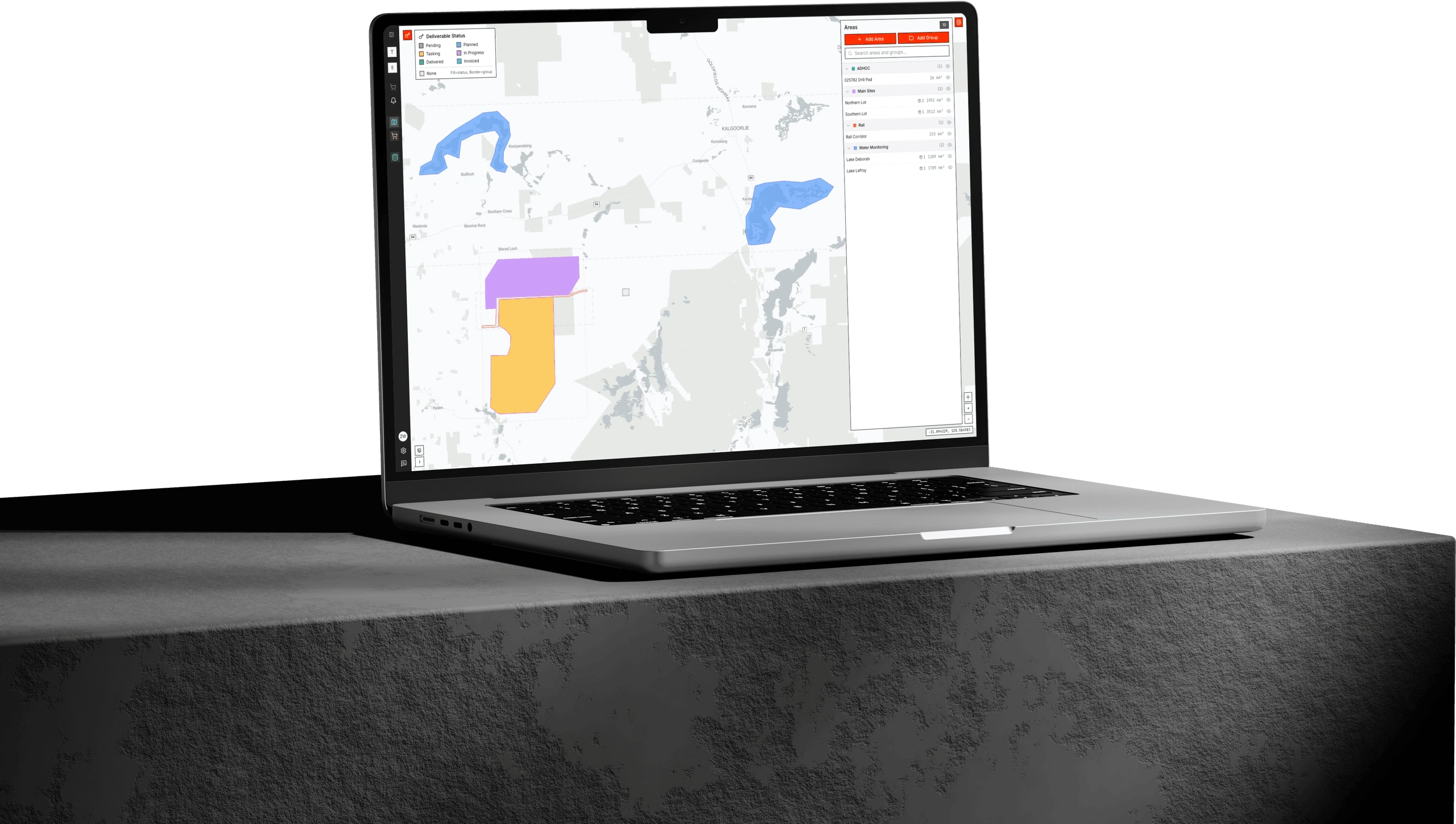

Albatross is where your whole portfolio orders and manages satellite data. Submit tasking, approve budgets, track deliveries and keep a defensible audit trail, all in one platform built for distributed mining operations.
Products
The data products behind the page.
Products
Satellite Imagery
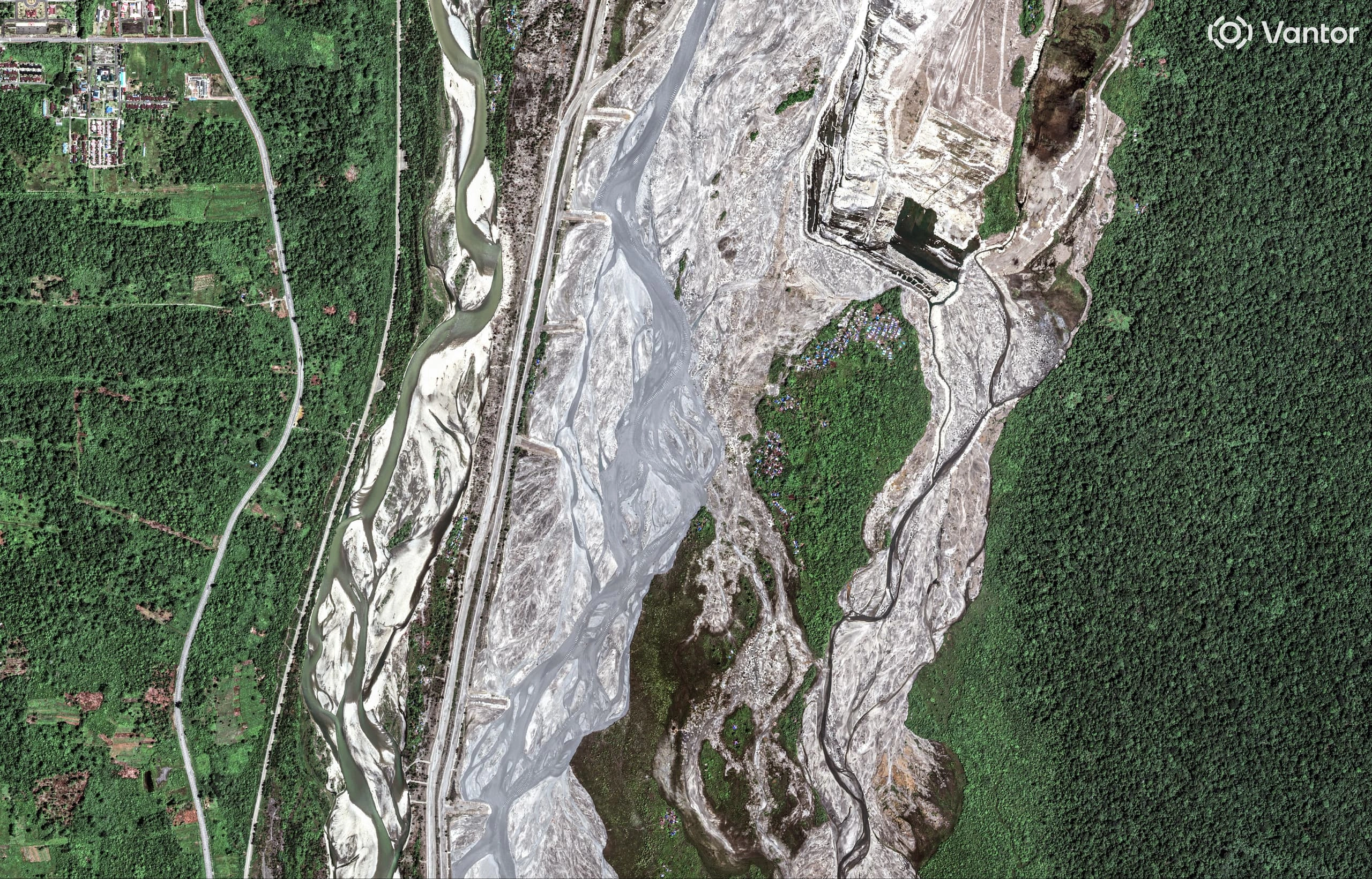
Analysis-ready optical and multispectral commercial imagery - colour-balanced, orthorectified, pansharpened and atmospherically corrected - for exploration, operations, digitisation and rehabilitation.
Products
Digital Elevation Models
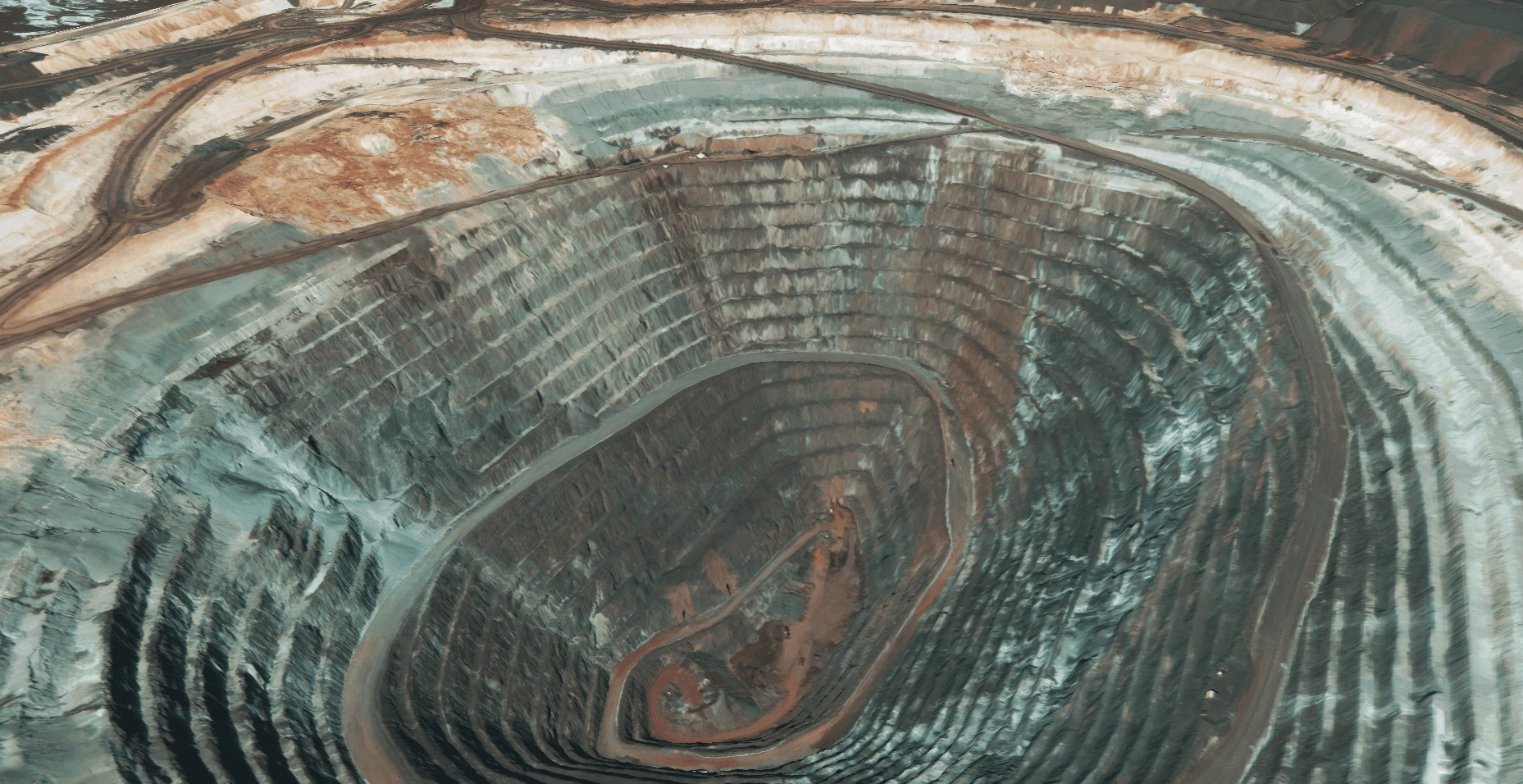
DEM, DSM and DTM products from 0.5m to 5m resolution for stockpile and pit volumetrics, haul and drainage planning, site design and ground baselines.
Put satellite imagery to work on your mine sites
Talk to the team about analysis-ready imagery, DEMs and analytics for your operation, delivered ready to use in your existing workflow.